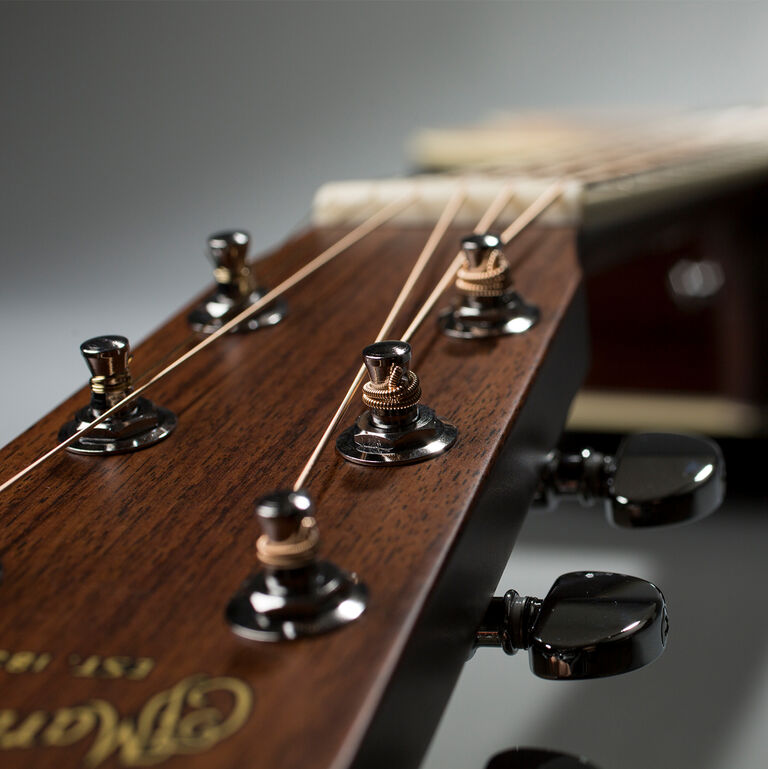
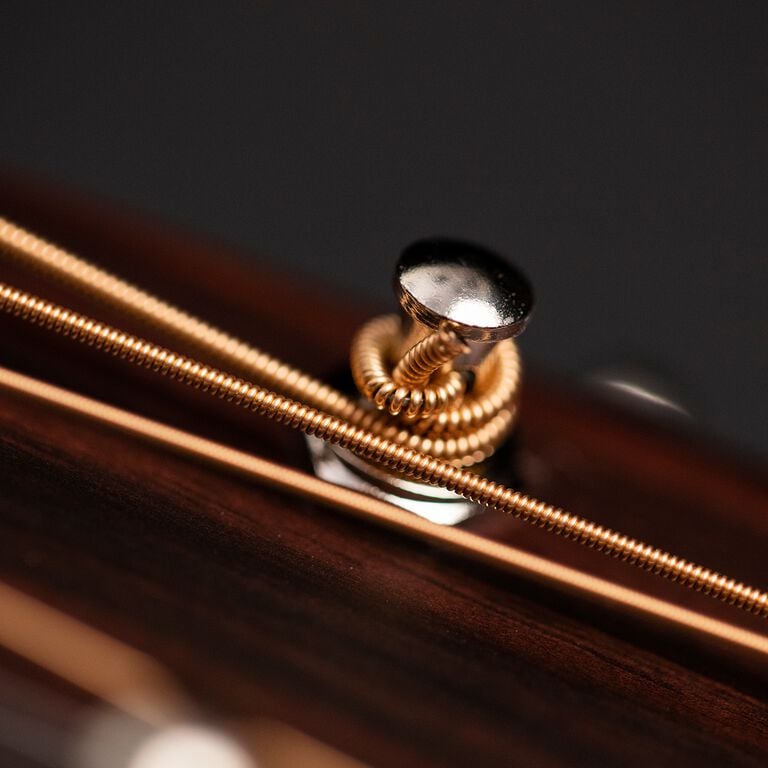
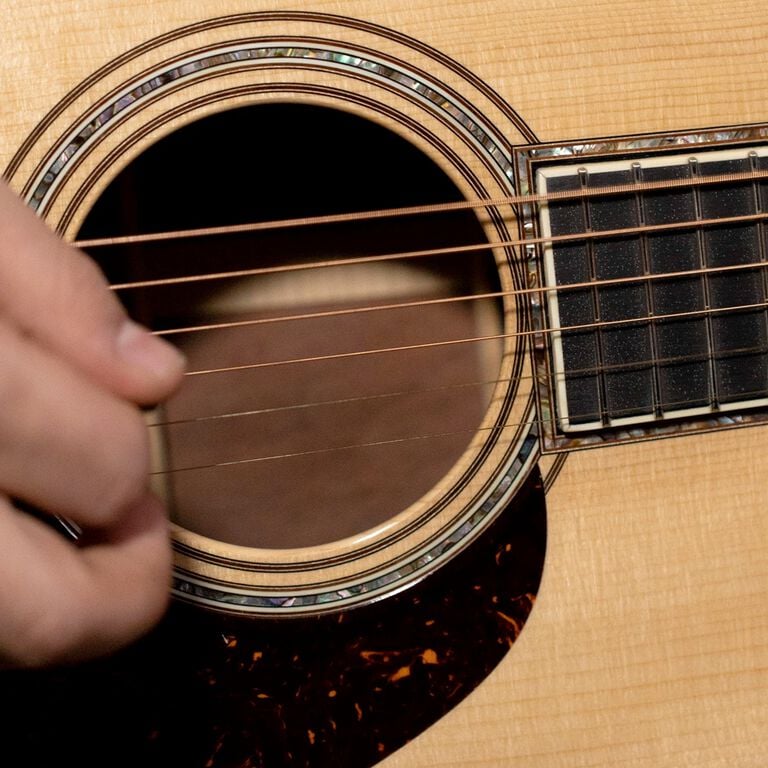
TYPES OF ACOUSTIC GUITAR STRINGS | The right strings can change the way your guitar sounds, feels, and responds. Whether you want a brighter attack, warmer balance, smoother feel, longer life, easier bending, or a more vintage-inspired voice, understanding acoustic guitar strings can help you choose the set that fits your instrument and playing style. Martin offers a wide range of acoustic strings, from classic Phosphor Bronze and 80/20 Bronze to Retro® Monel, Luxe by Martin® Kovar™, Flexible Core, Titanium Core, Lifespan® treated, Martin Era™ treated, Marquis® silked, and more. Use this guide to explore the materials, treatments, and winding styles that shape your tone.
The Importance of Guitar Strings
Strings are the first point of contact between your hands and your guitar’s voice. Every note begins with string vibration, which is then shaped by the guitar’s tonewoods, body size, bracing, and construction. That means the strings you choose can affect brightness, warmth, volume, sustain, feel, tuning stability, and even how long you can play comfortably.
Choosing strings should involve more than grabbing the first pack on the shelf. Material, gauge, core design, treatment, and winding style all play a role in how a set performs. A light-gauge Phosphor Bronze set may feel smooth and balanced, while a medium 80/20 Bronze set may bring more volume and sparkle. Flexible Core strings can reduce hand fatigue, treated strings can help extend string life, and Kovar or Monel wrap wire can give your guitar a distinctive voice. The best set is the one that helps your guitar feel right in your hands and sound right to your ears.
Acoustic Guitar String Materials
Your string material has a major impact on tone, feel, response, and longevity. Here are some of the most common acoustic guitar string materials, including key options in the current Martin Strings lineup.
Phosphor Bronze
Phosphor Bronze strings deliver a warm, balanced voice with smooth highs, rich mids, and dependable clarity. They’re a versatile choice for players who want one set that works well for strumming, fingerpicking, recording, and live performance.
80/20 Bronze
80/20 Bronze strings use a copper-and-zinc wrap wire for a bright, crisp voice with strong initial sparkle. They’re a great choice for players who want clear projection, defined attack, and a lively sound that can cut through a mix.
Kovar
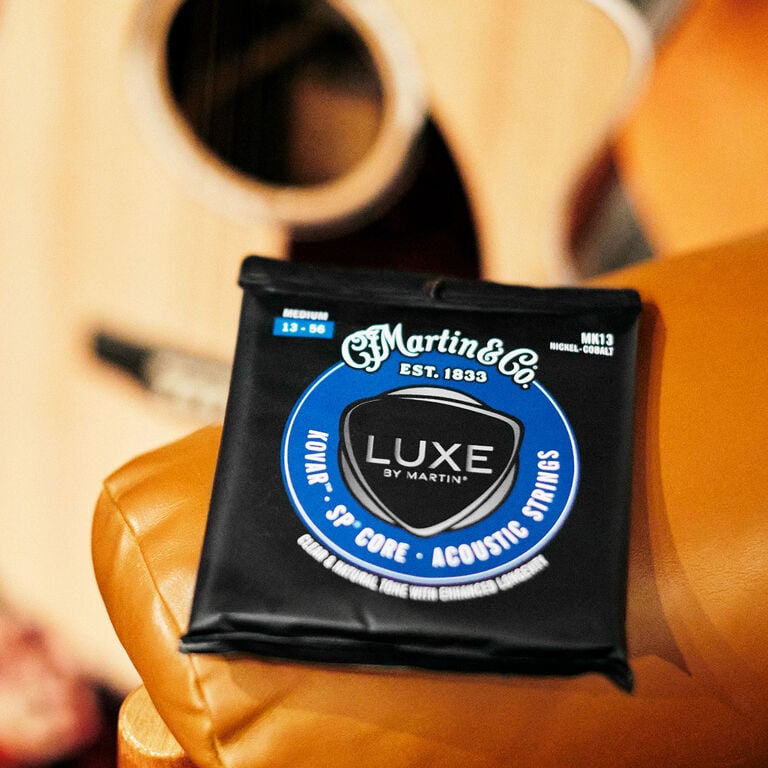
Luxe by Martin Kovar strings use a nickel-cobalt alloy wrap wire for balanced tone, clear response, and natural corrosion resistance. Available with SP Core or Flexible Core construction, they offer a modern acoustic voice with added comfort and control.
Monel
Monel is a nickel-copper alloy used in Martin Retro acoustic strings for a warm, dry, vintage-inspired tone. Rather than adding extra brightness, Monel helps reveal more of the guitar’s natural wood character and fundamental voice.
Silk & Steel
Silk & Steel strings use a soft filament layer between the core and wrap wire for lower tension, a smoother feel, and a warm, mellow acoustic voice. They’re a comfortable choice for fingerstyle players, vintage-inspired instruments, and anyone who wants an easier feel under the fingers.
Nylon
Nylon strings are designed for classical guitars and offer a soft feel with a warm, rounded voice. Some nylon sets include wound bass strings for added projection, while the treble strings provide the smooth response associated with classical and fingerstyle playing.
What Are Silked Guitar Strings?
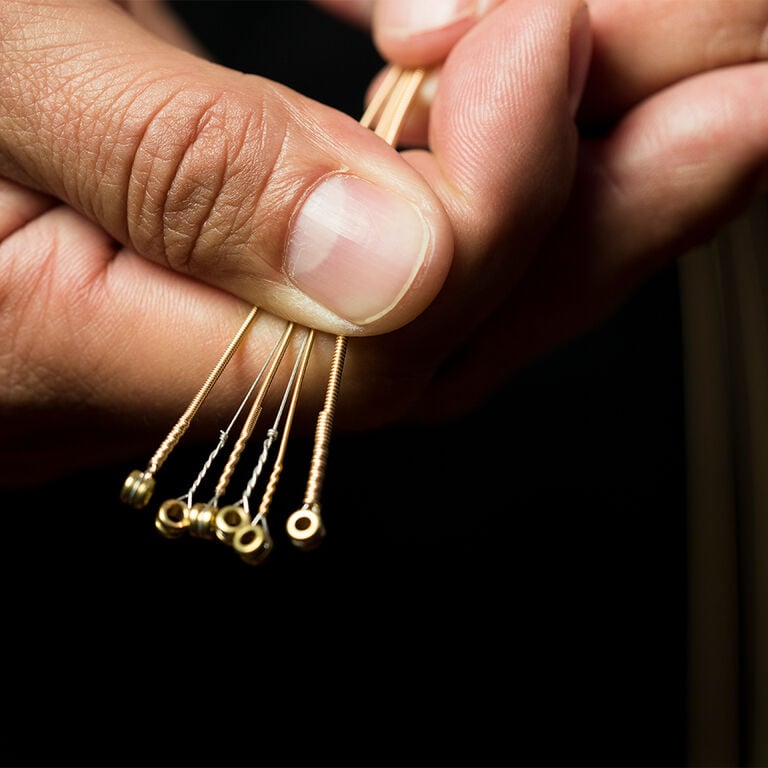
Silked strings feature a soft wrap near the ball end, adding a premium touch while helping protect the guitar’s bridge plate. Martin Marquis Silked strings are available in familiar acoustic materials like 80/20 Bronze, Phosphor Bronze, and Silk & Steel, giving players classic tone with an added layer of thoughtful detail.
What Are Treated Acoustic Guitar Strings?
Treated acoustic strings are designed to resist the dirt, sweat, humidity, and corrosion that can shorten string life. Martin Lifespan treatment protects the strings without adding a heavy coating, helping preserve tone, feel, and response through more hours of playing.
Martin Era strings build on that idea by bringing together long-lasting treated performance with a comfortable playing feel and premium silk-wrapped ball ends. They’re a strong choice for players who want modern string life and easy playability without losing the familiar tone and response of a high-quality acoustic set.
Coated vs. Uncoated Strings
Coated strings use a thin barrier to help resist corrosion, moisture, and buildup, which can extend string life but may change the way the strings feel or respond. Uncoated strings offer a more traditional feel and direct tone, while Martin treated strings are designed to deliver longer-lasting performance without the feel of a heavy coating.
Acoustic Guitar String Cores
The core is the center wire of the string, and it plays a major role in tension, flexibility, tuning stability, and feel. Martin offers different core designs so players can choose the response that best fits their hands and playing style.
SP Core, Flexible Core & Titanium Core
Martin’s acoustic string cores help shape how a set feels, responds, and performs under your fingers. SP Core strings provide a strong, reliable foundation for balanced tone, tuning stability, and everyday playability, while Flexible Core and Titanium Core options offer a softer, more responsive feel for players who want added comfort and control.
SP Core
SP Core strings use Martin’s Superior Performance core wire for dependable tuning stability, strong response, and consistent acoustic tone. They’re a great starting point for players who want familiar Martin feel and performance across a wide range of styles.
Flexible Core
Flexible Core strings use a lighter-gauge version of Martin’s Superior Performance core wire with heavier wrap wire for increased flex and playability. They’re designed to reduce finger fatigue, make bends feel easier, and maintain a full, balanced acoustic tone.
Titanium Core
Titanium Core strings use a flexible titanium core for exceptional comfort, response, and tuning stability. Strong, durable, and wrapped with pure nickel, they offer a premium playing experience with smooth feel, precise intonation, and long-lasting tone.
Acoustic String Winding Type
The winding is the outer wrap wire around the string core, and its shape affects both tone and feel. Most modern acoustic guitar strings, including Martin’s primary steel-string acoustic lineup, use roundwound construction for brightness, texture, and familiar acoustic response.
Roundwound
The most common acoustic string winding, offering clear tone, tactile feel, and strong projection.
Flatwound
A smoother winding style with reduced finger noise and a darker, more controlled voice, more commonly associated with jazz and electric instruments.
Halfwound
A middle-ground option designed to feel smoother than roundwound strings while retaining more brightness than flatwounds.
Martin Strings: This Is Why We Make Our Own
At Martin, we make our own strings because they are too important to the sound and feel of a guitar to leave to anyone else. Our lineup includes acoustic, classical, ukulele, banjo, mandolin, and bass strings, with options for every kind of player—from first-time beginners to lifelong musicians chasing a specific tone. Whether you play a Martin or another acoustic guitar, the right Martin Strings can help bring out more of your instrument’s voice.